
AI for the self-employed: tried it, never built it in
By now almost everyone has tried AI. A text for the website, a tricky email, a few ideas for the next post. The result was quite okay, sometimes really good, and then everyday life carried on as before. Two weeks later you are sitting at the same task at ten in the evening, doing it by hand.
If that sounds familiar, it is very likely not down to you, and not down to the tool either. AI sticks where it is practised, on the tasks that come back every week. In this article I tell you how it was for me and what I see again and again with my clients.
What the new figures show
Two surveys came out in November that fit together well. The Small Business Expo Research Team asked 764 small businesses. The most common use of AI is creating content, meaning texts and posts. And 71.2 percent mainly want AI to be more accurate, easier to use or better connected to their own tools. Among those not using AI yet, 69.2 percent want more training or lower costs.
The International Labour Organization (ILO) asked almost 18,000 women entrepreneurs, mainly in Kenya, Nigeria and Egypt. Just over half already use AI in their business, most of them for less than a year, and here too writing comes first (64 percent), followed by research (49 percent). In finance and internal processes, on the other hand, AI is still at a very early stage.
Neither survey can be transferred one to one to Switzerland. But I know the pattern very well from my workshops: AI is tried widely and stays on the surface.
My path: it started with pictures
My way in was image generation. In spring 2023 I booked a Midjourney workshop and then started creating images with AI myself. Even back then I knew this would be an important development, and I wanted to be right at the front. To this day Midjourney is, for me, the most artistically beautiful tool for trying out new things.
But what stayed was not only the images. What stayed was the habit of learning something new again and again. Right now I am in the middle of building my own AI workplace: folders in which the AI knows my documents, my own instructions so it does tasks the way I want them, and connections to the programs I work with anyway.
Looking back on the last three years, I find it incredible how much has emerged and how many tools have been added. And I had to learn something that is in no manual: letting go of many tools again. Not everything new belongs in my everyday work.
More time, but less got done
One sentence describes my early days quite accurately: I had more time, but I got less done.
As long as I only used AI now and then for single things, much of it stayed at the idea stage. Only when AI became a fixed part of my recurring work did that change. Today I create things I simply would not have had the capacity for before. The time did not free up on its own. It freed up because I did the same tasks with AI again and again and improved something each time.
Why the first draft rarely fits
In my coaching sessions and workshops I see one stumbling block particularly often: many people expect AI to deliver the quality they want on the very first try. When that does not happen, the disappointment is big and AI goes back in the drawer.
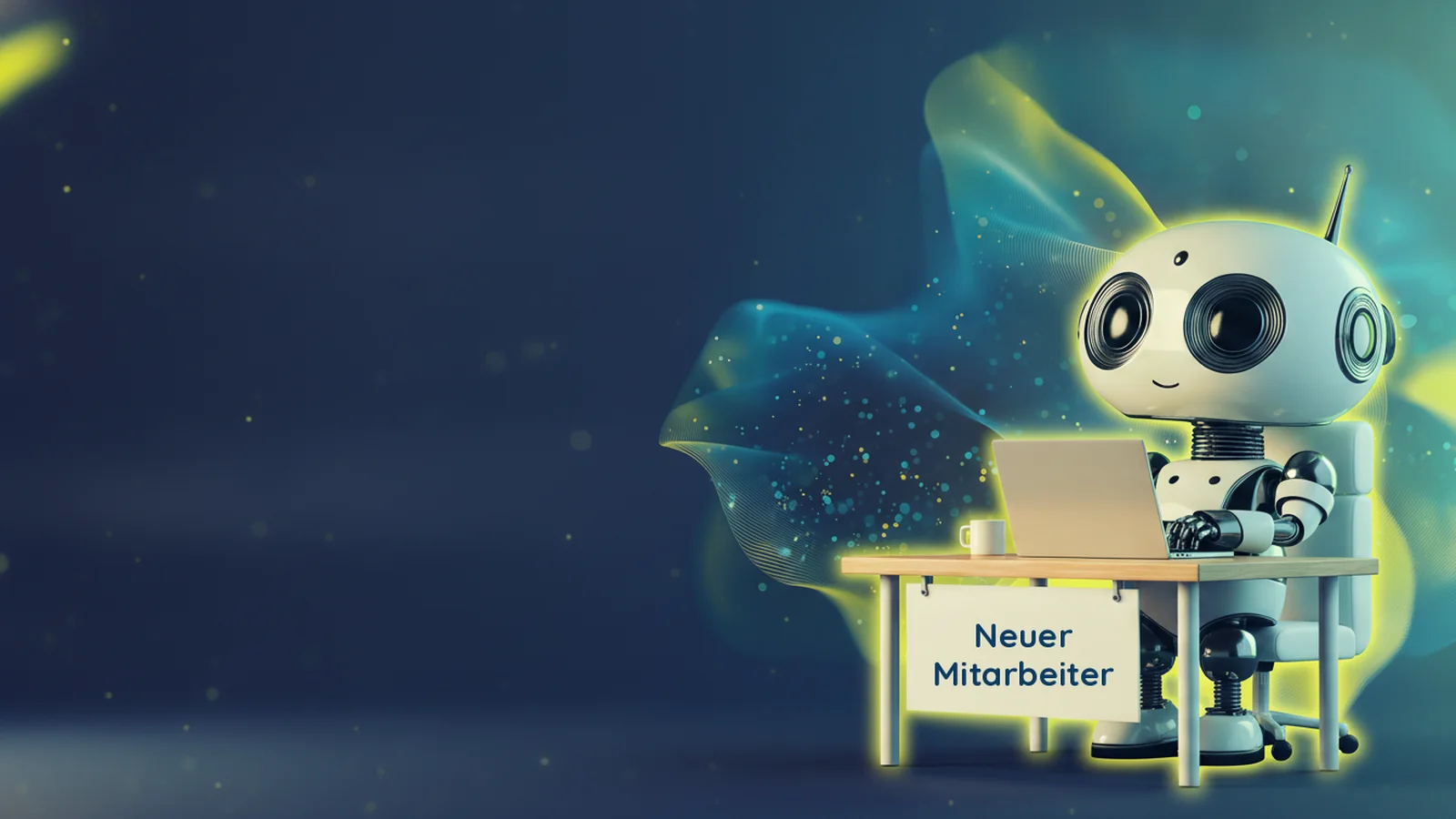
I like to compare it to a new employee. She is motivated and wants to learn, but on her first day she certainly does not know everything. You explain how you want something, she makes a draft, and you make corrections. The second time it goes better, by the fifth time it almost runs by itself. Nobody would send a new employee home after the first draft.
AI is just the same. Iterating is part of it, several times, and that takes patience. If you know this from the start, you will not give up after the first attempt.
How a try becomes a habit
From my own path and from working with my clients, four things have proven decisive for me:
- Pick a task that comes back every week. Not the big project, but what regularly costs you time: the quote, the follow-up email, the weekly post. A habit only forms around something that happens often enough.
- Plan for the corrections. Do not expect the finished result the first time, but a draft that you improve over two or three rounds. That is not failure, that is onboarding.
- Write down what worked. When a result finally fits, note how you explained it. That way the AI does not have to start from scratch next time, and neither do you.
- Let go of what you do not need. One tool you really know gives you more than ten you have looked at once.
This is exactly why I spread the sessions of WAItblick Flow over several weeks. Between sessions you keep working on your own tasks, and that is where the habit forms, not in the session itself. If you would like support over a longer period, WAItblick with twelve sessions is the right setting.
What AI does not do for you
To be honest: no AI takes the patience off your hands. The decision about which tasks you want to hand over and which you do not also stays with you. And there are weeks when everything is more important than practising. That is normal. A habit does not have to be perfect, it just has to happen more often than not.
Frequently asked questions
Why don't I use AI regularly, even though I have tried it? Usually because AI was tested on one-off tasks and not on the ones that come back every week. Without repetition, no habit forms. Choose one recurring task and do it consistently with AI for a few weeks.
How long does it take until AI really saves me time? That depends on the task. At first, expect more effort rather than less, because you have to correct and explain, just like onboarding a new employee. Once you have written down what works, it gets faster every time.
Do I need lots of different AI tools for this? No. To start with, one single tool that you get to know really well is enough. I have tried many tools myself and let many go again. What stays is what actually helps in your own everyday work.
Sources
- Small Business Expo: AI for Small Businesses, survey of 764 respondents, 13 Nov 2026
- ILO: Women entrepreneurs are already using generative AI, 9 Nov 2026
Let's talk. 30 minutes, no strings attached.
Tell me where AI is currently annoying, confusing or intriguing you. Afterwards you'll know which next step makes sense for you.
Book your free intro call →